









How SPRIBE Plinko Uses Rows and Risk Settings
In SPRIBE's Plinko, a ball falls through pegs and finishes in one payout bin. The rows and risk setting determine which payout table is active. The path is a presentation of the drop result rather than a surface where timing the button can steer it.
| Game element | What it does |
|---|---|
| Rows | Change the size of the board and active payout table. |
| Risk | Changes the set of payouts available. |
| Below 1× | Returns less than the stake. |
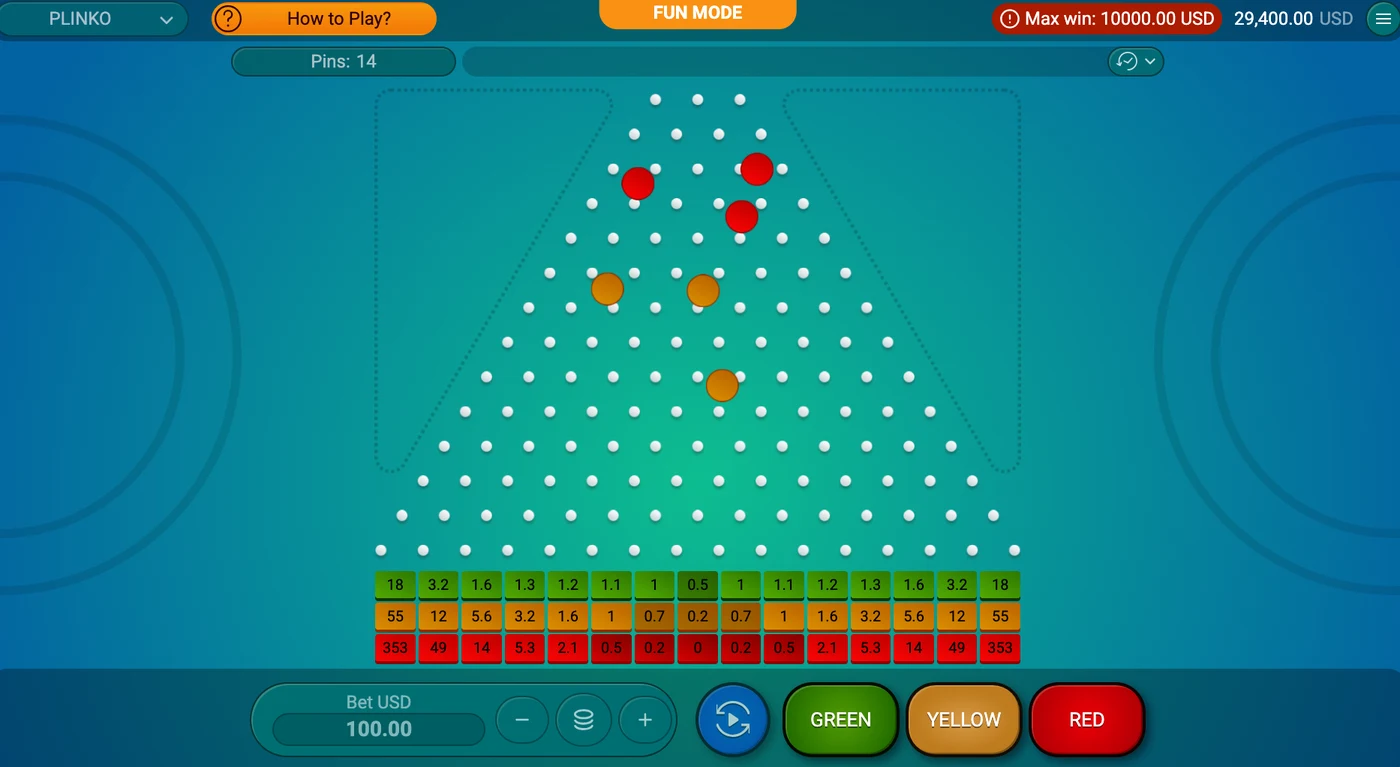
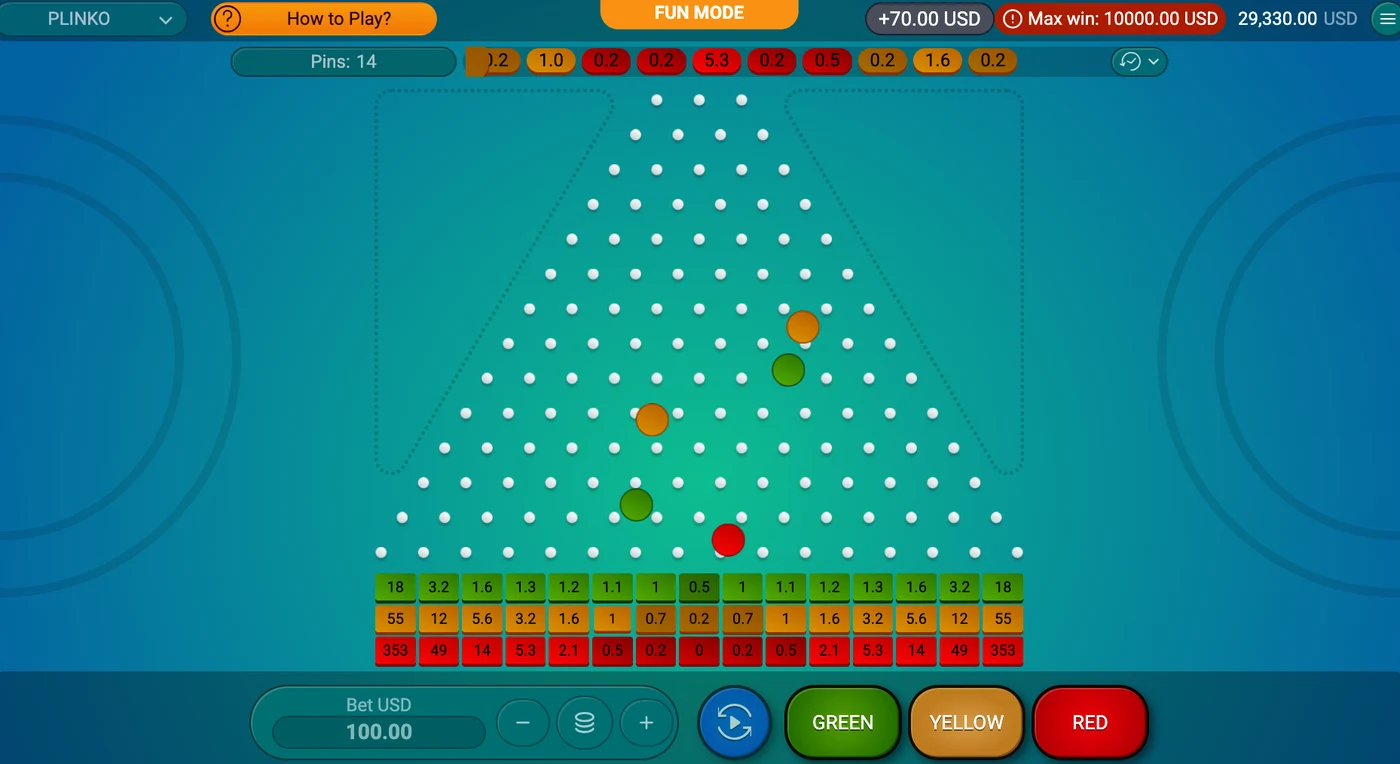
The row and risk controls govern which payout table appears below the pegs. The same ball animation can finish over a different multiple if either setting has changed. A helpful comparison uses the same stake on both layouts.
Inspect the centre and edge values together. A very large edge multiplier tells you the potential amount at that position, not how often it will occur. The available distribution cannot be recovered from the largest printed number alone.
How to read the bin value
A bin below 1× returns less than the stake, even though it produces a credited amount. Conversely, checking a single large edge bin does not tell you how common it is. Look at the entire board, including the lower-value centre and the actual multipliers in the selected layout.
- Read the lowest bins as well as the edge values.
- Check each drop's stake if autoplay is enabled.
A multiple describes the total return from the drop. At a hypothetical C$2 stake, a 0.5× bin credits C$1, leaving a net loss of C$1. A 1× bin credits the same C$2 that was committed.
The ball goes to one payout bin under the reviewed rules; contact with several pegs does not generate a series of cash amounts. The result history should match the completed bin and selected total stake.
| Illustrative bin | Credit and net result |
|---|---|
| 0.5× | C$1 credited, a C$1 net loss. |
| 1× | C$2 credited, which equals the stake. |
| 2× | C$4 credited, a C$2 net gain. |
The provider model and other Plinko editions
The listed 97% model describes the provider's version. Plinko is a generic game name, so another studio's board and payout table can differ. There is no reel bonus to unlock in this description. Where automatic play is available, each drop uses a separately committed stake.
This page covers SPRIBE's Plinko. Another developer can use a similar pyramid but different row options, risk settings or return. Use the provider name and loaded paytable when comparing demo material.
A sequence of automatic drops represents a series of wagers. Track the charge for each ball and the final balance, rather than treating several successive payouts as if they came from a single drop.
Plinko Demo
A SPRIBE Plinko demo lets you change the rows and risk setting and compare the payout numbers at the bottom of the board. Demo credits help distinguish a sub-1× bin from a bin that would return more than the stake.
When playing for real money, check SPRIBE as the provider, verify the active RTP and read the cost per ball. Automatic play can place several separately paid drops even when their animations overlap.
Gambling risks and limits
Paid rounds can lose the entire stake. Set time and spending limits before playing, avoid borrowing money to gamble, and take a break if you find yourself trying to recover a loss. Support services and self-exclusion arrangements vary by province.